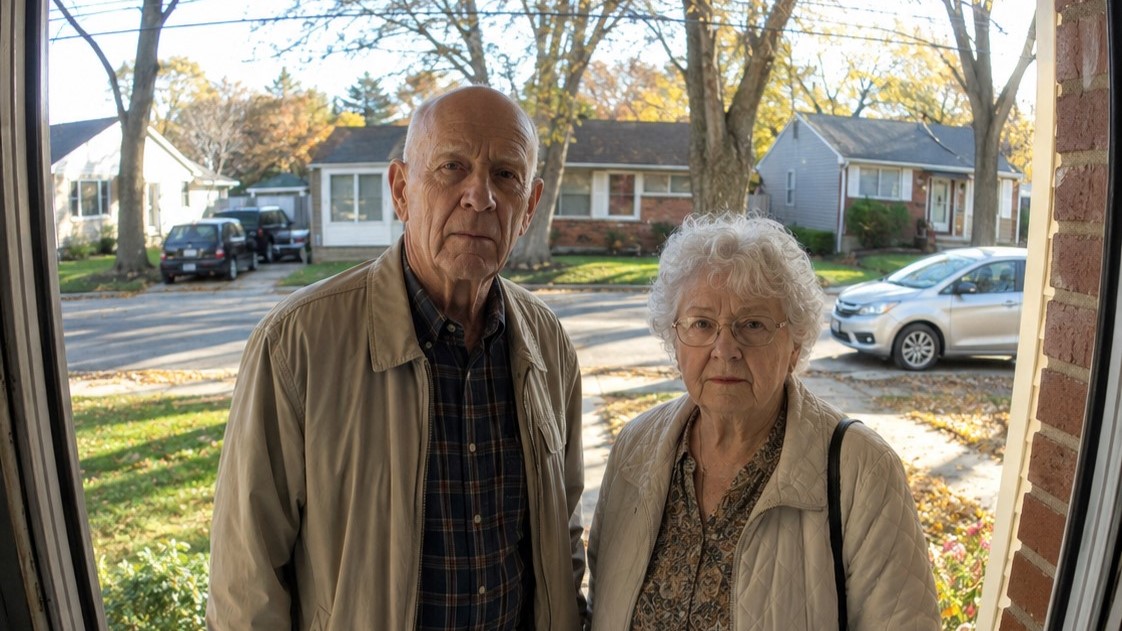
Three days after moving into our new house, I discovered a strange message scratched into the back wall of the upstairs hall closet. It was almost completely hidden behind an old wooden shelf left by the previous owner. The words were simple: “Don’t ever give the Harrises a key.” I called my husband, Jason, upstairs, and after reading it twice, he laughed it off. We assumed it was the remains of some old neighborhood feud or inside joke. The problem was that the Harrises lived directly next door—and they seemed like wonderful neighbors. Tom and Linda brought us food, lent us tools, gave us advice about the neighborhood, and quickly became unusually familiar with our home and routines.
A few months later, however, small details began to bother me. One night, we came home to find our garage door wide open, and Tom immediately identified the type of garage-door opener we had, even though the motor couldn’t be seen from the street. Later, Linda casually mentioned a small basement office that wasn’t visible from the staircase, then quickly explained that she had been inside the house years earlier when the previous owner, Margaret, lived there. Six months after we moved in, Jason and I planned a weekend away. When Tom learned we’d be gone until Monday, he offered to watch the house and asked whether we had a spare key. Jason told him we didn’t. The next morning, we left—and by Sunday afternoon, our doorbell camera sent me a motion alert.
I opened the footage and saw Tom and Linda standing outside our front door. Tom reached into his pocket, pulled out a key, inserted it into our lock, and opened the door. We had never given them permission to enter. I immediately called the police, and although the Harrises were gone by the time officers arrived, the investigation quickly uncovered something much bigger. Beneath the rug in the hidden basement office was a concealed floor safe containing an envelope from Margaret. She explained that she had once allowed the Harrises into her home but later changed the locks after valuables and financial records began disappearing. Investigators also discovered that Tom had previously been connected to Margaret’s late husband’s business dealings and that important financial records had gone missing.
Then the investigation revealed the most unsettling part: hidden cameras had been placed inside the house. Linda eventually admitted that Tom had copied Jason’s house key during our first week in the home, and police recovered blank keys, a key-copying kit, photographs of financial documents, and sketches of our basement along with notes about our daily routines. Tom was arrested, while Linda cooperated with authorities. We replaced every lock, changed the garage access, upgraded our alarm system, and installed additional cameras. But I never removed the warning from the closet wall. Even after repainting and replacing the shelf, I kept those words visible: “Don’t ever give the Harrises a key.” At first, I thought the message was strange. Then I thought it was irrelevant. Now I understood that it wasn’t really about a key—it was about how easily someone can become familiar, helpful, trusted, and eventually use that trust to cross a boundary.
